Depreciation: How to Calculate Equipment Wear and Build It into Your Decisions
Depreciation is the gradual transfer of the value of equipment, a vehicle or other long-term property into expenses over the years of its use. The basic…
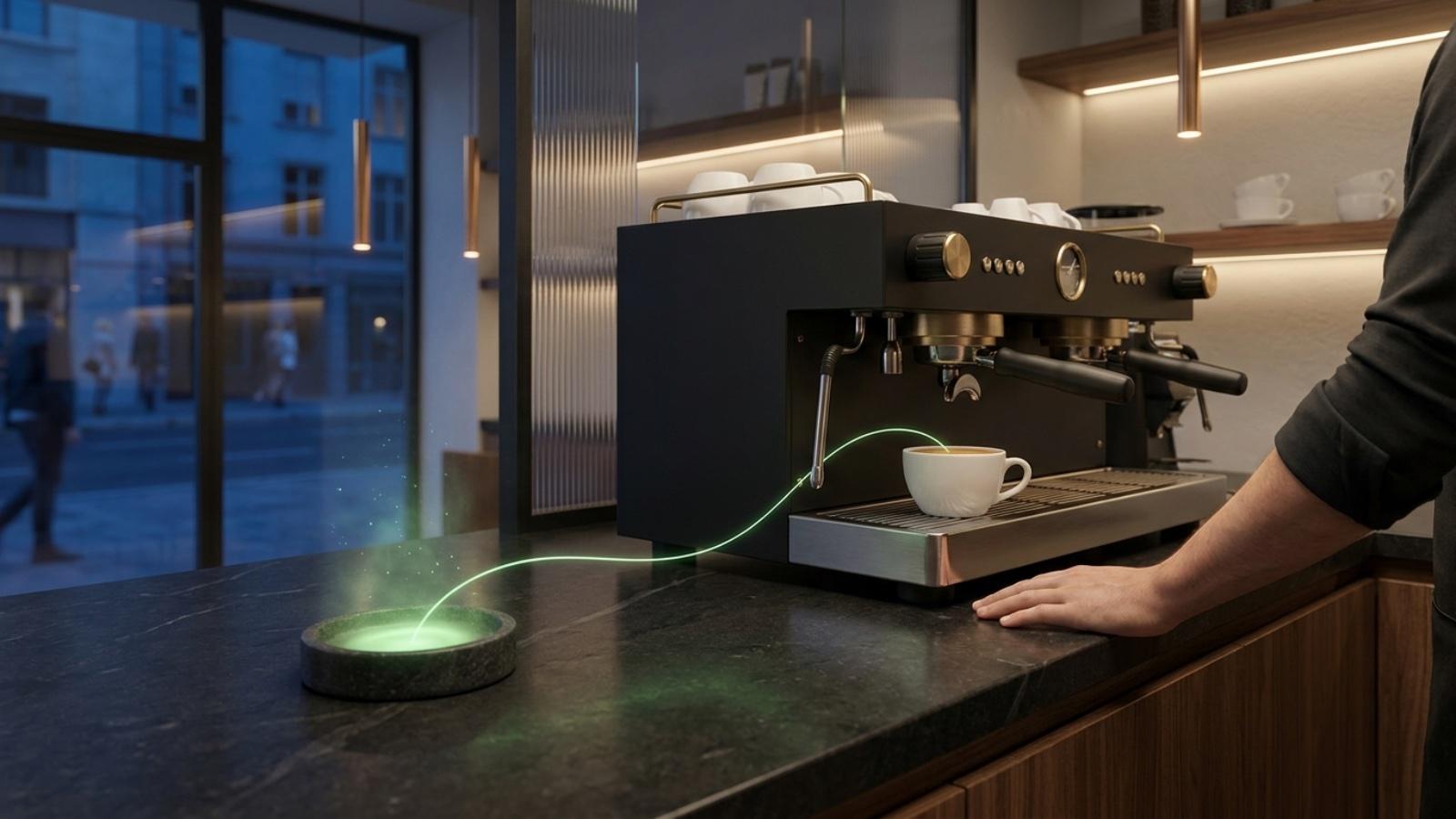
Depreciation is the gradual transfer of the value of equipment, a vehicle or other long-term property into expenses over the years of its use. The basic calculation: subtract the salvage value from the purchase cost, and divide the result by the number of years of use.
Below we cover which assets are depreciated, the three inputs of the calculation, and three ways to calculate, using a coffee machine as the example. At the end we show how to use the result in pricing and in your equipment replacement plan.
In plain terms. Imagine you bought a coffee machine for $3,750 and will work with it for five years. If you record the whole amount as the expense of a single month, that month will look loss-making, even though the machine will work for all sixty months. Depreciation spreads the machine's cost across all the months in which it brings in revenue.
What depreciation is and why you need it
Let's start with the essentials. Depreciation is the systematic allocation of the cost of a long-term asset over the periods of its use. It is an expense that is not accompanied by a payment at that moment: the money was spent earlier, at the time of purchase.
Why do you need it? Without depreciation, the month you buy equipment looks loss-making and the following months look unreasonably successful, because the equipment is already working while its cost has gone nowhere. With depreciation, each month carries its own share of the cost, and the profit of different months can be compared.
There is also a practical reason. Knowing the monthly depreciation, you understand how much money to set aside for replacing the equipment so that you have the needed amount by the end of its service life.
Which assets are depreciated
Long-term assets that last more than a year and have a noticeable value are depreciated: equipment, vehicles, furniture, computer hardware, renovation of a rented space. Materials, consumables and goods for sale are not depreciated. Materials and consumables are recorded as expenses when they are used, and goods when they are sold. Low-cost items that last more than a year but are below the threshold are usually expensed as soon as they are put into use.
The threshold value from which an item counts as a long-term asset is set by accounting policy rules and the legislation of your country. So it is worth checking this with an accountant or a lawyer in your country. In this article we look at the principle of the calculation, which is the same for any threshold.
Three inputs for the calculation
Most methods need three basic numbers, and it is worth determining them before you start. The units-of-production method also needs the equipment's total lifetime output and the output for the period. In the double-declining balance method the salvage value is not part of the formula, but the remaining value does not go below it.
Step one: the original cost. This is the amount you paid for the asset, including delivery, installation and setup. For our coffee machine it is $3,750. Why include delivery and installation: without them the machine does not work, so they belong to its cost.
Step two: the salvage value. This is the amount for which, by your estimate, the asset can be sold after its service life ends. For the coffee machine let's assume $750. If it is hard to estimate, you can assume zero, which makes the calculation simpler.
Step three: the useful life. This is the number of years you plan to use the asset. For the coffee machine let's assume five years. The life depends on workload and maintenance, so it is convenient to check it against your own experience with similar equipment.
Three ways to calculate depreciation
There are several methods. For a small business, three are often enough, and each answers its own question.
The straight-line method
Depreciation is the same every year. This is a simple method, and it suits equipment that is used evenly.
Annual depreciation = (Original cost − Salvage value) ÷ Useful life
For the coffee machine: ($3,750 − $750) ÷ 5 = $600 per year, which is $50 per month. The table shows how the machine's value decreases over the years.
Year | Depreciation for the year | Remaining value at year-end |
1 | $600 | $3,150 |
2 | $600 | $2,550 |
3 | $600 | $1,950 |
4 | $600 | $1,350 |
5 | $600 | $750 |
Total | $3,000 | $750 salvage value |
After five years the remaining value equals the salvage value, which is $750. The calculation adds up.
The double-declining balance method
Depreciation is higher in the first years and decreases over time. The example below uses a rate twice the straight-line rate. Some national accounting standards treat this as a separate method from the ordinary declining balance method, in which the rate is calculated differently and takes the salvage value into account. The method suits equipment that quickly loses value or is most heavily used at the start, such as technology that quickly becomes obsolete.
Depreciation for the year = Remaining value at start of year × Depreciation rate
The rate is often taken as double the straight-line rate: the straight-line rate is 1 ÷ 5 years = 20% per year, double is 2 ÷ 5 = 40% per year. Year one: $3,750 × 40% = $1,500, and the remaining value becomes $2,250. Year two: $2,250 × 40% = $900, remaining value $1,350. Over two years $2,400 has been written off, whereas the straight-line method would have given $1,200 over the same period. The remaining value does not go below the salvage value, so in the final years the depreciation amount is reduced.
The units-of-production method
Depreciation depends on how much the equipment has actually worked: cups made, kilometers driven, hours worked. The method is more precise when the workload differs from year to year.
Depreciation for the period = (Original cost − Salvage value) × (Output for the period ÷ Total lifetime output)
For the example, let's assume the coffee machine's capacity is 300,000 cups, which is 5,000 cups per month over five years. In the first year, busier than average, it made 75,000. The share is 75,000 ÷ 300,000 = 25%. Depreciation for the year: $3,000 × 25% = $750. In a year when the machine worked less, the amount will also be smaller.
For comparison, here is what the three methods give in the first year for the same coffee machine.
Method | When it fits | First-year depreciation |
Straight-line | Workload is even across years | $600 |
Double-declining balance | Value drops quickly in the first years | $1,500 |
Units of production | Workload differs across years | $750 at 75,000 cups |
The approaches allowed in accounting and tax reporting are set by the legislation of your country, so the method for reporting is worth checking with an accountant. For the management decisions discussed next, any of the three methods gives a useful picture.
How to use depreciation in decisions
A calculation makes sense when you can see an action in it. Here are three ways to use depreciation.
Build it into the price. The coffee machine's monthly depreciation is $50. If it makes 5,000 cups a month, each cup carries 50 ÷ 5,000 = $0.01. This share goes into the cost of a cup next to the beans and milk. This way the price accounts for both the materials and the cost of using the equipment.
Set money aside for replacement. The monthly depreciation of $50 can be transferred to a separate account every month. Over five years, $50 × 60 = $3,000 will accumulate, and together with the proceeds from selling the old machine, $750, that is already $3,750. The amount covers a replacement at the same price. If equipment prices rise, it is worth setting aside more.
Compare purchase decisions. For a coffee machine for $3,750 with a five-year life and a salvage value of $750, depreciation is $50 per month. This amount goes into the cost price. Payback is calculated differently: divide the purchase price by the additional cash the equipment brings each month after paying for materials and maintenance. For example, if the machine adds $250 a month, the purchase pays off in 3,750 ÷ 250 = 15 months.
Picture Emma. She runs a coffee shop and bought a coffee machine for $3,750. In the month of purchase, her report shows a loss, even though the coffee shop operates as usual. Emma calculates depreciation of $50 per month and adds it to the cost calculation for a cup. Now in her calculation each month carries its own share of the machine's cost, and the difference between months is no longer tied to a one-time purchase.
How to reflect property and wear in your accounting
When there are several assets, it is hard to keep in your head the original cost of each and their service lives. This is where accounting in which property has its own place helps.
In BizFin, for equipment, vehicles or real estate you create an account of the «Property (equipment, vehicles)» type in the «My Accounts» section. Such an account is not included in the «Total Balance» at the top of the page, so it does not mix with the funds for everyday needs. In the «Balance Sheet» report it falls into the «Assets» block as a non-current asset, and the account's value is shown both in its own currency and in the base currency.
There is no automatic calculation of depreciation or revaluation of property yet: in the «Balance Sheet» report, property is shown at the value recorded on the account. So you carry out the calculation by the formulas above separately, and the value on the account can be reduced manually by recording an expense from the property account for the amount of depreciation.
Saving for replacement can be kept the same way as any other reserve. It is convenient to create a separate account, for example «Equipment Replacement,» and in the «Transactions» section add a «Transfer» from the main account to it. In the transfer form you can turn on «Schedule» and choose the repeat «Monthly»: a reminder will appear in the «Scheduled Transactions» section, and you confirm it with a green mark once the transfer is made. A transfer is neither income nor expense, so profit reports do not change.
What to remember
Depreciation spreads cost across years. It makes months comparable, because buying equipment does not distort one single month.
Most methods need three basic numbers. The original cost, the salvage value and the useful life are determined before the calculation starts. The units-of-production method also needs lifetime output and output for the period.
The method depends on the workload. Even use suits the straight-line method, uneven use suits the units-of-production method, and equipment that quickly becomes obsolete suits the double-declining balance method.
Depreciation is worth building into the price. Monthly depreciation divided by volume shows the share of the equipment's cost in one service or one cup.
It is convenient to set money aside for replacement in advance. If you transfer the monthly depreciation to a separate account, by the end of the service life, together with the proceeds from selling the old equipment, you will have enough for new equipment at the same price. If equipment prices rise, it is worth setting aside more.
Frequently asked questions
What is depreciation in plain words?
It is spreading the cost of equipment over the years in which it is used. Instead of one large expense in the month of purchase, you see an even share of the cost in each month of use.
Is depreciation an expense?
Yes, but it is not accompanied by a payment at that moment: the money was spent at the time of purchase. That is why depreciation is counted in the calculation of profit and cost, but not in cash flow.
What if the salvage value is unknown?
You can assume it is zero, and then the formula reduces to the original cost divided by the life. The annual amount will be larger: for the coffee machine, 3,750 ÷ 5 = $750 instead of $600, but the calculation is simpler.
Which depreciation method should I choose?
For equipment with an even workload, straight-line fits; for technology that quickly loses value, double-declining balance; for equipment with an uneven workload, units of production. The methods allowed in accounting depend on the legislation of your country.
Do I need to depreciate all equipment?
Long-term property that lasts more than a year and has a noticeable value is depreciated. Consumables are expensed when they are used, and low-cost items below the threshold are usually expensed as soon as they are put into use. The value threshold is set by accounting policy and the legislation of your country.
How do I reflect depreciation in my accounting?
It is convenient to carry out the calculation separately using the formulas in this article. In accounting, the equipment's value is kept on a separate property account, and the monthly saving for replacement is recorded as a transfer to a separate account.
Start seeing your money clearly
Add your accounts, record operations - and you will see where the money goes and how much is left.